
If you run a small business in Tasmania, you may know the feeling...
The days get shorter, the temperature drops, and somewhere around late May the phone starts ringing a little less.
Bookings slow down. The website goes quiet. And you're left wondering whether it's something you've done, or just winter doing what winter does...
Here's the thing: for a lot of Tasmanian businesses, a winter dip is completely normal.
And it's worth saying up front that the wider picture is a healthy one. Tasmania recently welcomed 1.36 million visitors across the year, surpassing all pre-COVID visitation highs for the first time, with visitor spend reaching $3.6 billion (Source: Premier of Tasmania).
So the demand is there; it simply moves differently in the colder months.
The whole rhythm of buying behaviour shifts in winter:
But normal doesn't mean you're powerless.
There's a big difference between the businesses that go quiet and wait it out, and the ones that use the season to their advantage.
That starts with understanding why the drop is happening in the first place, and resisting the urge to make rushed decisions off the back of a slow week.
Dominic, owner of Wakeford Digital, shares: "As a digital marketing and web design agency here in Hobart, we get it."
"Working with clients across a whole range of industries, we know that come May, the phone tends to ring a little less."
"We feel the first point of call is understanding the reason behind that drop, rather than just guessing."
"Instead of making rash decisions about where you invest your time and money, have a look at the macro picture, so what's happening across your industry, and then the micro picture, which is your own website, search and social data."
"That's what really helps you chart a plan, especially for local businesses on smaller budgets."
So, whether you're a tour operator, a cafe, a trades business or a fitness studio, this article walks through how to approach winter with a clear head and a bit of strategy.
Here's what we'll cover:
Let's dive in...
The most common mistake we see is a business owner panicking after one slow fortnight and completely changing their approach. Before you change a single thing, look at what your data is actually telling you.
Is general website traffic down, or is it just your booking page? Are people still finding you in search, but not converting? The answer changes everything about what you do next.
This is where year-on-year data earns its keep.
Year-on-year simply means comparing this winter to the same period last winter, rather than to the busy summer you've just come off. It's a much fairer comparison, because it strips out the seasonality and shows you whether things are genuinely off, or just following their usual pattern.
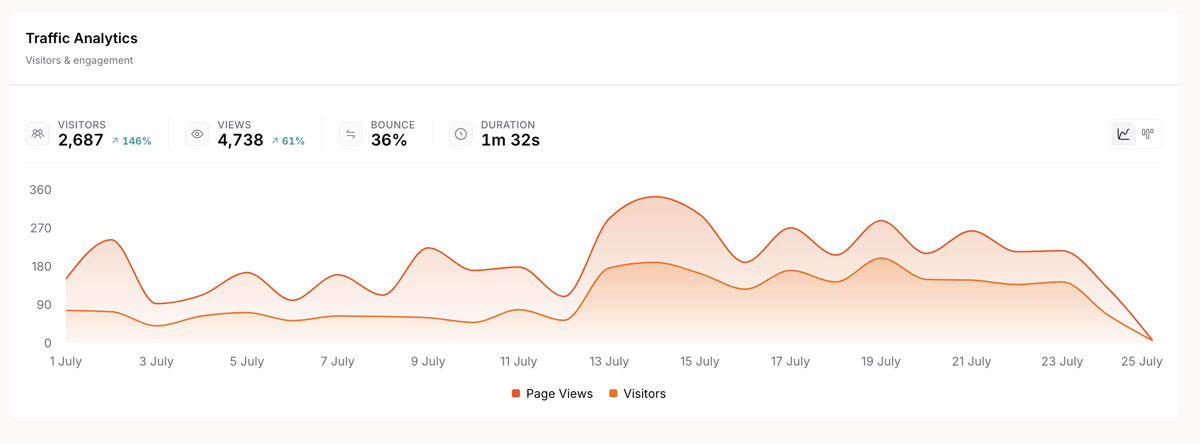
Dominic notes, "For our tourism clients especially, a lot of it comes back to year-on-year data. Is this drop happening because of winter, or because of something else?"
"If March is a little slower, then April is slower again, that's your signal to have a broader think, rather than reacting to one quiet week."
"Once you know the pattern, you can plan for it instead of panicking."
The good news is you don't need a fancy setup to do this. A properly configured analytics tool and Google Search Console will tell you most of what you need to know. If you haven't got that foundation in place, that's step one, because you can't manage what you can't measure.
Your move: Pull up your analytics and Search Console, compare this winter to the same months last year, and pinpoint exactly where the drop is happening before you spend a dollar reacting to it.
Here's the stat that surprised even us.
Tasmania's strongest-ever summer quarter drew around 454,000 visitors. Winter is genuinely quieter, but nowhere near dead: the state's Off Season period from May to August 2025 still pulled a record 339,800 visitors, with visitor spend up 8.1 percent year-on-year (Source: Tourism Tasmania).
In other words, winter isn't an absence of customers. It's a different kind of customer, looking for a different kind of experience.
And the businesses that win are the ones who give it to them.
Looking for an example? Check out the post from Tasmanian fly fishing guiding business Trout Tales who share the fullness of winter in the Central Highlands:
Dominic shares:
"From our experience and broader market research, we know the businesses that do well often lean into winter rather than fight it."
"Dark Mofo is the obvious one. Its whole essence is about embracing the fact that Tasmania is cold."
"A sauna and cold plunge is arguably a better experience in winter than in summer, and the good operators lean right into that."
"So my tip is simple: embrace what makes Tasmania unique, and think about how that connects to your business."
Dark Mofo is a good illustration of just how much appetite there is. The 2025 festival drew close to 120,000 unique attendees and delivered more than $67 million to the state's economy, with over 35,000 people through the Winter Feast in its first three days alone (Source: Pulse Tasmania).
You can see the same thinking across the industry.
During the 2025 Off Season, Tasmanian operators created a record 790 winter experiences and events (Source: Tourism Tasmania). That's a lot of businesses deciding winter was worth showing up for.
Your move: Ask yourself one question. What does your business offer that's actually better, cosier or more appealing in the cold, and are you making enough of it?
One of the biggest behavioural shifts in winter is how far ahead your customers plan.
In summer, someone might book a day trip on 48 hours' notice. In winter, they're more likely to plan a trip in advance, often as a couple or a group.
That has a direct implication for your marketing.
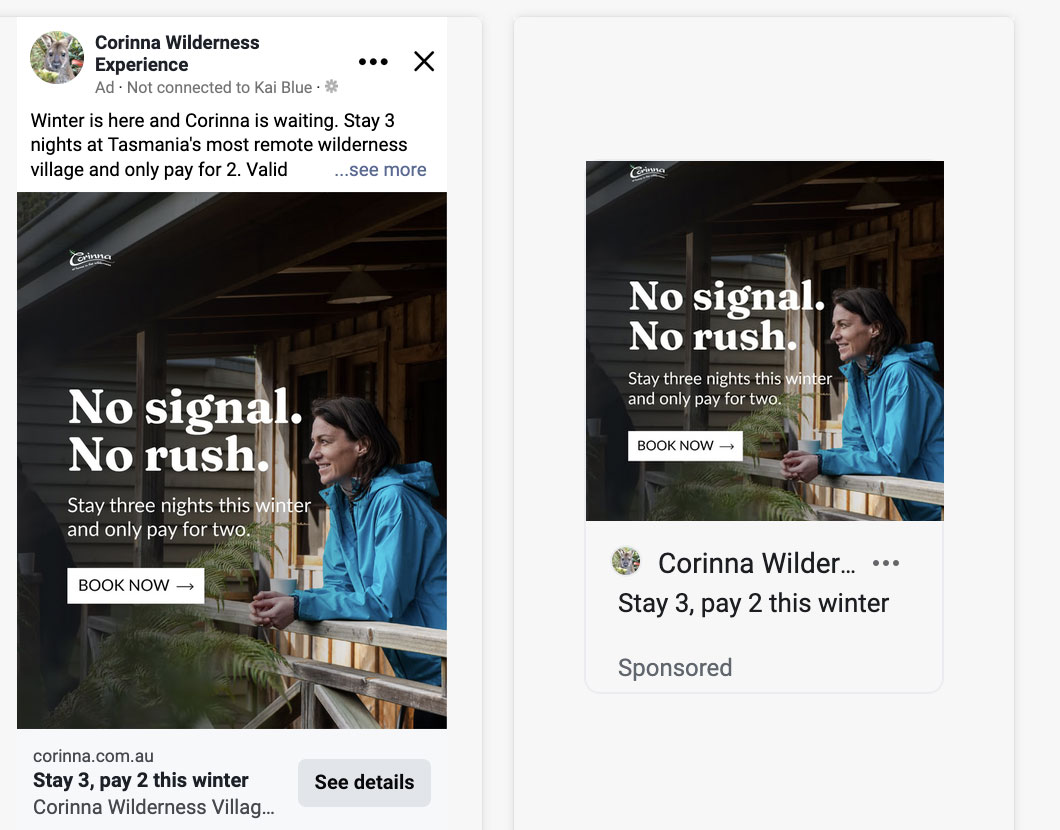
Dominic points out, "So instead of putting up an ad in the thick of winter, do the work in the lead-up."
"If they're not booking right now, you want to be front of mind for when they do."
This is why the businesses that treat winter as a lead-up period, rather than a scramble, tend to come out ahead. Building that presence takes consistency, whether that's through steady content, an ongoing social media advertising campaign, or simply staying visible in local search.
Your move: Don't wait for winter to hit before you market. Start building visibility now, so you're the name people remember when they finally sit down to book.
When things slow down, a few areas tend to give the best return. Rather than spreading yourself thin, focus here:
Lean into social media. It's tempting to go quiet when your content doesn't feel as exciting, but that may be the wrong tactic. Even one short video post a week that plays to those Tasmanian qualities can keep you visible and top of mind.
Keep your SEO ticking over. People search in their own time, and you can't force that. What you can do is make sure that when they do search, you're right there at the top. Keeping your local SEO solid through winter means you're not scrambling for visibility when demand picks back up.
Get your offer right. This is the big one, and it deserves its own moment.
Dom's Tip: "SEO isn't just your website. Google Business Profile is a really underrated one."
You can post offers and promotions straight to it, and it shows up right when someone's searching for you."
"And if you're running a winter sale, make sure those products or packages are actually being pushed through to Google, and to any other platforms you're on like TripAdvisor. There's no point having a great offer if the places people are searching don't know about it."
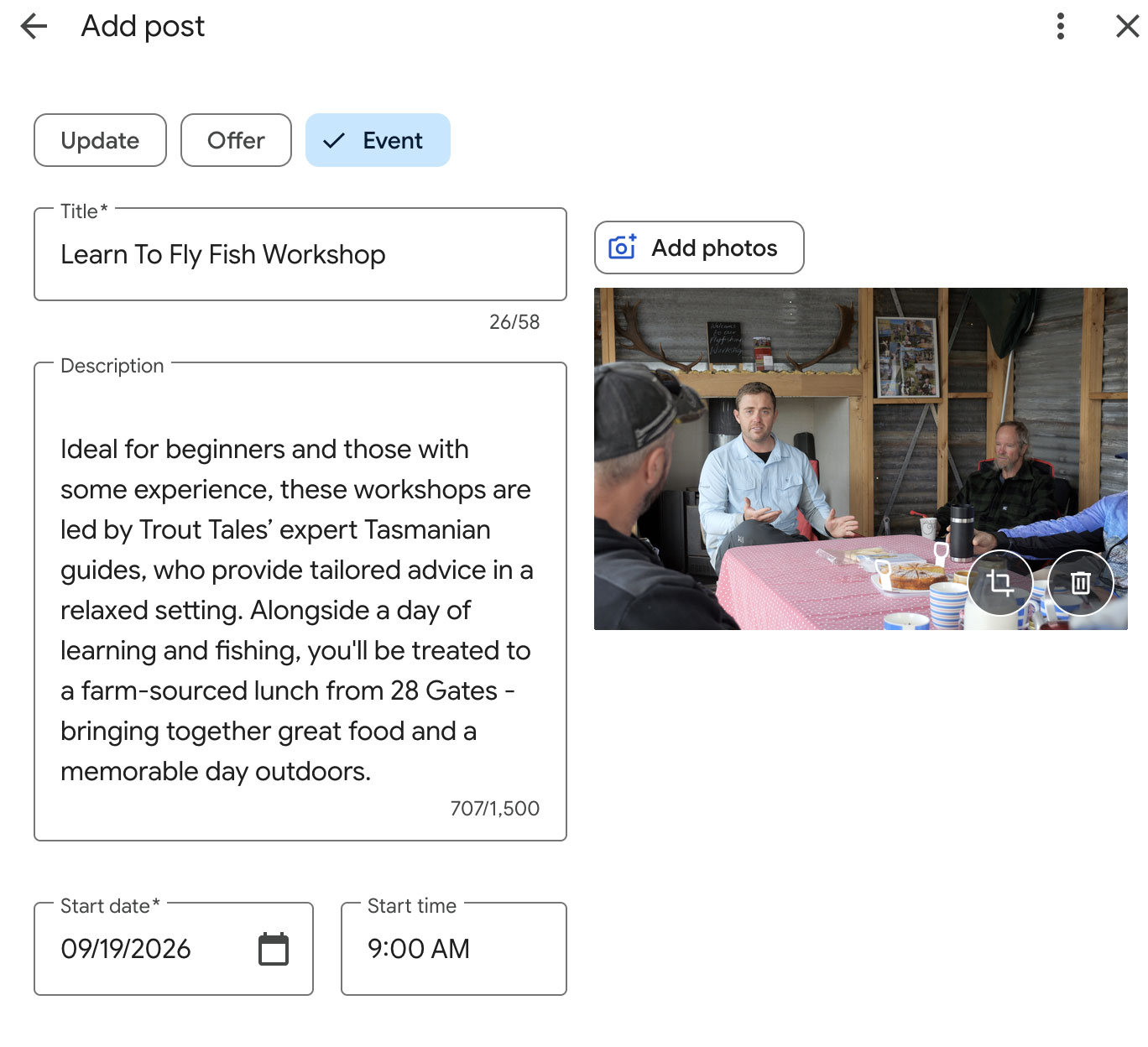
On the offer itself, Dominic adds, "Don't just list your prices and hope, think about what would actually get you over the line."
"Say you run a pilates studio. 'Hot mat pilates all month' is fine, but it might not be enough to get someone off the couch. Something like '$49 intro month, stay warm this winter' gives them a reason to act. A good offer can be the reason someone chooses you."
It's worth doing the sums on offers too. Even a discounted first session is worth it if it brings someone in who then returns at full price. You're not giving margin away, you're buying a customer.
Your move: Pick one social platform and post consistently, keep your local SEO healthy, and put together one genuine offer with a real reason to act. Then make sure that offer is on your Google Business Profile, not just your website.
If winter hesitation is about the effort not feeling worth it, one of the best fixes is to make the experience bigger than a single service.
Dominic highlights the value of thinking beyond your core offering, "Don't take for granted what you've got in the warmer months. Can you package your service up with another business to make it more enticing?"
"And think about the whole group, not just the person doing the main activity. Often one person is there for the fishing or the walk, and someone else is looking for something to do while they wait."
A guided outdoor experience becomes far more appealing when it also includes a hot lunch by a fire afterwards. Suddenly the cold isn't a downside, it's part of the story.
The accommodation sector shows how powerful this can be.
Dominic shares:
"Up at Cradle Mountain, seeing a wombat wander around in the snow is almost as much of the appeal as summer. The providers up there really lean into the winter character."
"We were up filming for a client's pre-opening week last season and it snowed. It was undeniably cold, but it gave us some genuinely beautiful footage that would appeal to a certain kind of traveller."
Because winter naturally means fewer people are visiting overall, you'll also be competing harder against bigger players with deeper marketing budgets. That's exactly why a clear point of difference matters so much in the colder months.
Check out the winter shoot in the player below:
Your move: Look at whether you can bundle your service with another local business, or add something for the people who are just tagging along. Make the whole trip worth it, not just the main event.
Winter doesn't hit every business the same way. Here's how the impact tends to differ, and where to focus.
Tour and adventure operators feel it most. The reliance on the outdoors means both the cold and Tasmania's unpredictable, wet weather work against you. This is the group with the most to gain from leaning into the winter character rather than apologising for it.
Food and beverage takes a knock as fewer people head out, and those who do tend not to linger as long. Offers, cosy positioning and reasons to stay a little longer all help.
Trades and construction are impacted differently, and the angle here is less about marketing spend and more about pipeline.
Dominic notes, "We feel for the trades it's a bit different, where the angle I look at is securing work for the back end of the year. Weather conditions aren't as favourable, so be mindful of timelines and communicate that with clients."
"And the Christmas shutdown in the trade space is a decent one, so making sure you've got work locked in through that period really matters."
Gyms and fitness studios might seem like winter winners, but the reality can often be the opposite. People are far less likely to get up at 6am when it's zero degrees outside. Rather than pushing hard against that, tweaking your timetable to suit slower mornings tends to work better.
Retail and accommodation both feel the drop in overall visitor numbers, which makes differentiation and smart packaging the key levers.
For some businesses, winter isn't just a soft patch. It's a genuine hit to revenue. If that's you, here's where to start without burning cash or getting overwhelmed.
Begin with a winter overview. A simple audit of your channels tells you which are performing and which aren't, so any decision you make is grounded in data rather than guesswork.
Then test small.
Dominic's advice, "Instead of making a decision for the sake of it, base it in data, then give yourself room to test and iterate without betting the whole business on one thing."
"As business owners we can all get the blinkers on. Sometimes leaning on someone in the digital space, even just for a quick consult rather than a full engagement, is a good way to get a wider picture of where you stand and what competitors are doing."
Looking for help with your digital marketing? We're always happy to have a chat about your ideas, reach out to Dom and the Wakeford Digital team.
Why does my Tasmanian business slow down in winter?
For most local businesses, it's a mix of fewer visitors to the state and locals being less inclined to head out in the cold and rain. The size of the dip is very industry-specific, which is why your own data matters more than any general rule.
Should I stop advertising over winter to save money?
Not necessarily. Because people plan further ahead in winter, staying visible in the lead-up keeps you front of mind for when they do book. Going completely dark often just means you have to rebuild momentum later.
What's the single best thing I can do for winter marketing?
Look at your data first. A quick year-on-year review tells you whether your slowdown is normal seasonality or a genuine problem, and that changes what you should do about it.
Do offers and discounts actually work in winter?
They can be very effective, provided the sums stack up. A discounted first visit that turns into a full-price returning customer is a win. The offer is simply the reason for someone to choose you now rather than later.
Which digital channels are worth focusing on in the colder months?
Social media and a strong, clear offer tend to give the best return when search demand naturally softens. Keeping your local SEO healthy ensures you capture the searches that are still happening.
Winter in Tasmania doesn't have to mean going quiet and hoping for the best.
The businesses that come through it well are the ones who understand their own numbers, lean into what makes this state genuinely special, and give people a real reason to choose them.
Start with your data. Plan ahead rather than scrambling. Get your offer right, and don't be afraid to package things up or get a fresh set of eyes on your strategy.
And if you'd like a hand making sense of where your business stands heading into the colder months, we'd love to help. Whether it's a quick chat about a project or a proper look at your digital presence, feel free to get in touch. Thanks for reading!